Sunday, October 23, 2022

The Enveloping Expanse


Arriving at dusk, the evening cool is a deceptive welcome, belying the withering sun that will find us on the hikes of subsequent days. The baking heat creeps up on you, covertly, like the ocotillo thorns veiled behind the succulent leaves. And yet your feet keep moving, drawn forward along the stony sand - sometimes upward, sometimes downward, but inexorably onward - beckoned by an inarticulate invitation; felt, rather than heard, toward...

What?

Perhaps toward more of oneself. Perhaps into a vaster comprehension of the yet inscrutable magnitude of creation's subtle immensity and complexity. Perhaps those are ultimately one and the same. These lands - we - are as towering and sculpted as the stone canyon walls; as tenacious as the desert streams; as poised and posed as the balanced rocks; as beautifully shy as the succulent blooms, seduced into color by the evanescent dew; as determined as the coyote scavenging for food; as dangerous as the mountain lions and as irritating as the thorns; as known and still unexplored as the caves, the canyons, the looming peaks, the miles of cactus-pocked sand.

Big Bend is as evocatively compelling as it is foreboding and dangerous. Like trekking the soul, exploring this larger than life landscape is as precarious as it is instructive; as grueling as it is nourishing.

Heavy-soled shoes seeking purchase; bodies bending to avoid the pricklies protruding from almost everywhere; eyes scanning for spiders or snakes.

Everything at Big Bend National Park bites, burns, punctures, trips or stings.

And takes your breath away with awe.

When the heat finally finds you, next steps begin to elude you.
"I look to the hills. Where does my help come from​?"
Water bottles are soon as exhausted as legs. Lips crack. There are miles to go.

How can one endure an hour longer?
How can one possibly leave?

The enveloping expanse first shrinks, then expands you; first decimates, then opens you to unexperienced majesty.

My foot slips climbing the stones, who unapologetically scold, "Pay attention!" My sleeve snags on an encroaching thorn which scoffs and advises me, "Watch where you are going!" A snake slithers across the trail, pausing long enough to admonish me that I am not the only one here. My irises swing between expansion and contraction, torn between taking in the horizon versus focusing on the details.

And then the sun goes down - the mountains and stones and fatigue dissolve into stars. Black and unmitigated sky as vast as the sands, and stars the diamonds envy.

And we are one of them - one with them - born by the desert winds and God's own Spirit into the heavens.

And then the sun rises, and all begins again.

Thursday, September 29, 2022

The Blessing Gift of Common Grace

The parks were a refreshing amazement. Even the people who visited them alongside of us.

In Vermont, the state parks beckoned our hiking - well-conceived, well-maintained, and well-augmented for varied physical abilities. We trekked through forests, along streams, below waterfalls. There were boardwalks strategically placed, interpretative signs at provocative intervals, and when we bumped into other tourists they were invariably kind, helpful, interested - and interesting. Public restrooms were matter-of-faculty and plainly marked “gender free.” The parks and their facilities were conspicuously free of subtle barbs or swipes or ideological shade. Instead, they were simply and self-evidently provided, by the taxpayers of the state, for everyone and anyone. They weren’t “gold-plated,” they were simply nice and freely available. The “Commons” here occupy a place of respect.

Similarly in Maine where the National Park is the draw. Here the offerings are not free, but affordable to most. We were surrounded by patient drivers, respectful crowds, congenial and well-trained employees, an army of volunteers, and of course the national and natural treasure that is Acadia. Animating our experience was the palpable demonstration of the good that philanthropy can serve.

As with so many other special places around the world, Rockefeller money is behind the park, but other benefactors have followed their lead. I know there is much to critique about how all their money came to be amassed. I don’t cite the benefits of their benefactions to cancel out those issues, but to stand these shiny actions alongside those tarnished ones where they simply exist in tension. Whatever social and environmental atrocities those family empires might have committed - the self-interested appetites they may have fanned - I am deepened and enlarged by the common blessing they, along the way, bequeathed.

It has, then, through trail and queue and road and shared experience, alongside tour buses and cruise ship shore excursions and fellow-hikers, been a heartening couple of weeks. So much about America has appalled and embarrassed me in recent years - its malignant penchant for suppressing and repressing; its inflamed racism, misogyny, xenophobia, and sexual inflexibility; its matter-of-fact willingness to cage children, demean immigrants, weaponize religion, and simply walk around angry with a perpetually teetering chip on our shoulder. I honor and revere the noble ideals that animated this country’s founding, even as I ache over the ways our founders violated those ideals even while trying to embody them.

At least they tried to embody them. On paper.

Now, we largely can’t be bothered. “For” apparently nothing, while “against” virtually everything; with our petulant self-interest ascendant, common interest is an annoying bug we gleefully and aggressively squash.

Except, that is, in the parks of Vermont and Maine and, I suspect, beyond. There, civility and civilized generosity, alongside ordinary mutual respect, prevail.


Maybe it’s nature’s influence.  

All I know is that it’s beautiful.

 In every way.

Saturday, September 17, 2022

Recovering the Verb in the Noun

For 21 years now my birthday has been a complicated celebration.  The first 45 years of my existence I had rocked along, blowing out candles on this favorite day, and tearing off wrapping paper.  And then terrorists hijacked planes and flew them into the World Trade Center towers in New York City.

On September 11, 2001.

My birthday.

Dimming the candles.  

Staining the fancy paper.

Depleting some of the sugar from the cake.


I was still here, of course.  Nothing had changed about the fact of my birth.  It was still the anniversary of the day I emerged into the world.  The truth was simply amplified, from that day forward, that the world into which I had been birthed is many things - including dangerous - and is infinitely larger than me.


This most recent birthday turned the speakers of that amplification in still another direction.  September 11 came, as it always does, a short three days after September 8, which this year transformed into the day my Mother died.


It is a clumsy and disorienting juxtaposition - sadness and joy, an ending and a beginning, loss and gain.  While birthdays are commonly hours filled with the celebration of being, deaths foment a flurry of doing.  There are phone calls to make, arrangements to conceive and set in motion, household spaces to reorder and travel schedules to negotiate and book.  The trailing days of death are a cascade of minutiae that therapeutically distract and physically occupy.  Very little space remains for candles and cake and singing.  A birthday, suddenly inconvenient, is a discordant non-sequitur. 


Unless, I realized, the death in whose context that birthday occurs, happens to be your Mother.


Suddenly, the initially discordant notes resolved into a different kind of harmony.  The subject of both the life and the death aligned as the same.  What more perfect way to observe a birthday, I realized, than to elevate the one who occasioned it?  And how, I wondered, had attentions so dramatically veered away from this gratitude in the first place - layering frosting and fondant on the birthed, rather than the birther?


The attentions, I realize, are not mutually exclusive.  There is room to celebrate both.  Perhaps I am only speaking confessionally that heretofore I haven’t.  My attentions and my indulgences have focused exclusively on me.  I have taken the day off. I have unwrapped gifts and, in those occasional years when I was alone, even bought them for myself.  The pronouns were “I”, “me”, “mine”.  The circumference of the celebration was that I had been born.  For 66 years I have been well-celebrated and more than adequately feted.  The focus was limited to the noun of my being.


I’ll not make that mistake again.  It was, after all, an act in which I exercised no agency, and was only passively involved.  The hard work - the contracting, the dilating, the pushing and panting and rupturing - was not mine.  There was a verb behind my noun.  If anyone deserves a song and a celebration it is my Mother who accomplished the “doing” of my “being.”


The best I can do is to try to be the gift.  

The birthed, living gratitude for the birther.

Saturday, August 27, 2022

Making Peace With Grace

We have a perennially conflicted relationship with grace.  Especially in this country where we routinely bow before the altar of the Protestant Work Ethic. Our particular expression of it may be our own, but evidence suggests that humans in diverse cultures have struggled for centuries with unmerited goodness – else why would Jesus, among others, have told so many stories in which grace is the hero?  The passing Samaritan owed nothing to the beaten man in the ditch – who had done nothing to deserve his attack, but neither done anything to merit the stranger’s kindness.  He was given grace.  The loving father owed nothing more to his errant younger son, but he met the shamed child’s return with grace.  “Forgive us our debts,” Jesus taught us to pray, “as we forgive our debtors.”  “Love your enemy.”  Just for starters.  


But never mind all that.  In this country, an aspirational meritocracy, sleeping in whatever bed we have made is righteousness while charity, mercy, and the undeserved break are sins.  


Grace we begrudgingly confine to matters of the spirit, where, despite our loathing, we accept divine generosity as a precondition to salvation. We want to “go to heaven when we die,” and if grace is the only ticket, then OK.  We’ll go with it.  In church, but nowhere else.  Step outside those stained glass-windowed doors and it’s back to the bootstraps. Pull yourself up.  


As far as I can tell, that’s the rub behind the recent decision to forgive, within limits, some student indebtedness. “You knew what you were getting into when you cashed those loan checks.  Don’t ask me to bail you out.”  We have an allergy to the notion of people getting what they don’t “deserve”.


Except when self-interest offers an antihistamine. 


Most years the government sends me money to augment proceeds from our under-performing South Texas farm. Some years those payments are classified as “price supports,” other years they are designated as disaster relief from some horticultural calamity – a drought, a storm, a pandemic, an embargo.  As far as I know, I did nothing to deserve these payments other than show up.  But I didn’t send them back.


When we installed solar panels several years ago, we happily and gratefully accepted the tax credits that took the edge off the expense.  


Pretty much every organization with which I have some connection - and many of the businesses I know - received PPP loans during the recent pandemic which were subsequently “forgiven”.  Every one of those same organizations and businesses - along with every one of their Board members and shareholders – breathed a sigh of relief.


All manner of industries receive what amounts to “welfare” payments in the form of tax credits, incentives, and outright grants – the ethanol industry, the petroleum industry, hog confinements and even Amazon whenever they build a new warehouse.  America owes its auto industry to federal bailouts.  


I have no doubt that there are multiple reasons behind such munificence, some of them almost certainly nefarious. Politics.  Pandering.  Among others.  Against those, however, is the natural and useful imperative of government to encourage the common good, and incentivize it.  We will frequently disagree with the justifications ascribed to one or another recipient of such public support, but they are more Darwinian than even Darwin who assert that no such encouragement should be monetized whatsoever.  The “free market” is crueler than nature, and I am willing to hope that we can do better.  Jesus thought so.


We can liberate grace from the sanctuary and allow it to flourish in the breadth of our living and not merely our aspirations of Heaven.  As a lifestyle and not merely a theological transaction.


Maybe even in our public policies.  Maybe even in our public life.  Grace, breaking out all over.  


Heaven help us.


Please.


Who knows what might happen?  After all, we know the hell that happens when it doesn’t,  

Friday, June 24, 2022

Now That We Have Decided


I have often confessed that I am never more successful as a gardener than before I have planted the first seed.  Once the promises are sown, all bets are off.  The seed might fizzle, the proferred moisture may be too little – or too much; there are chewing bugs, choking weeds, shredding winds and withering diseases.  The more I insert myself into this alchemy of growing, the more I am amazed that any of it thrives.  It is utterly simple, and infinitely complicated.


I thought of this complexity today when I learned of the Supreme Court’s decision on abortion rights.  The public values on this matter are competing and the respective voices are long-entrenched, and I’ll leave it to wiser minds with more of their bodies involved and at stake to carry the meatier conversation.  I’ll admit that I never really believed we would return to this prohibition, not particularly out of concern for the fetuses involved or the women impacted, but because the ready availability of abortions has been handy solution for Presidents, legislators, jurists, preachers and other men – those who have historically calibrated and policed the public moral compass – whose ejaculations needed handy eradication.  But that point, I suppose, is unhelpfully snide and picayune.  Suffice it to say that the decision is hailed by many as a “win” for “life”.  God knows “life” is due some kind of “win” in this culture of death. But forgive me if I feel a bit skeptical.  As a culture we have never scored too high when it comes to the sanctity of life; we have viewed our embryos like I have viewed my seeds:  never so marvelous as before they are actually born.


If, now, the “right to life” is to be the law of the land, with no competing rights superceding – if this moment is, in fact, an honest assertion and recalibration on behalf of life rather than a triumphalist, albeit pyrrhic ideological victory - let’s get on with building out the premise.  Once these babies are actually born, let’s ensure that they have the health care every one of them needs to thrive.  Health care providers and manufacturers might protest that they have a right to a profit, and I can’t disagree.  But we have decided that such rights are necessarily secondary to the right to life and must be commensurately curtailed in deference to life.  Once these babies are school aged, let’s have an honest conversation around what we need to do to keep them safe and out of the crosshairs of harmful actors intent on bloodshed.  Let us develop and impose strategies that will prevent the violation of these students’ right to life.  Gun manufacturers and owners will point to the Second Amendment and reiterate their right to bear arms, and that is certainly true.  But as a culture we have now implicitly declared that the Second Amendment is as secondary as a woman’s right to manage her own body.


These, of course, are only initial considerations.  Surely the “right to life” extends beyond the classroom and the playground, to the movie theaters and the ice creams shops and the dance clubs and the worship centers and beyond where the right to life is currently and increasingly routinely abrogated.  Into these arenas, yes, but surely into our criminal justice system as well.  Life, after all, is life, with one no more valuable than another, so the idea of capital punishment is surely as heinous as abortion.  Judging relative value – and when, or even ‘if’ such value can be lost – is surely among the very definitions of sin for those who hold themselves submissive to a supreme being in the vein of the Abrahamic traditions.  Vengeance, we are told, is right retained by God.  Judgment is above our pay grade.  It isn’t a “right” that we can either claim or defend.  


And so if life it is to be, let’s honestly, forthrightly, and even inconveniently embrace it.  It will not do to plant this garden and then let it go feral and to seed.

Saturday, April 2, 2022

Shown the Way by One Who Has Been There

 Several years ago (OK, it was SEVERAL years ago - like 1991) I keynoted a high school youth camp in east Texas.  My presentations that year used as a springboard a recently released song by the rock group, Styx, called "Show Me the Way."  It struck me at the time to be an unusual kind of rock song - reflectively serious and almost anthemic in character; putting its musical finger on the disillusionments of the time and the questions of the ages.   

Every night I say a prayer

in the hope that there's a heaven

And every day I'm more confused 

as the saints turn into sinners

All the heroes and legends I knew as a child 

have fallen to idols of clay
And I feel this empty place inside

 so afraid that I've lost my faith
… Show me the way, 

show me the way
Take me tonight to the river
And wash my illusions away
Show me the way


It all sounds rather current now that I listen to it again, and still swells a lump in my throat for sentimental and even spiritual reasons.  I've asked those questions myself, after all, and prayed those very prayers.  I've sifted through the broken shards of those "idols of clay" and plumbed the depths of that empty place inside.  I know what it's like to "wake up each morning and turn on the news to find we've so far to go..."  So far, indeed.


I hadn't thought of the song - or heard it - in years, but it came to mind this week as I prepared to start recording the audiobook version of the memoir I wrote a few years ago about finding a home at Taproot Garden.  Talking with the owner/sound engineer of the recording studio in which I had booked time - a relatively new operation that opened just before the pandemic - I learned that he had purchased the mixing board that now anchors his studio from the widow of a sound engineer in Chicago who had recorded all or at least most of the Styx songs during the '80's and early '90's - Styx being a Chicago-based band.  


I pondered the poignancy and possibilities of how all those various vocal and instrumental tracks that translated all those angsts and questions and disappointments and discontents and higher aspirations - the musical and emotional raw materials - had passed through this board to create "Show Me the Way" and others of those well-known hits of the time; and how now, all these years later, my voice speaking aloud some of those same questions and searchings and aspirations would be passing through the same board, subject to the same knobs and slides and levels, in service to my own humble project.  


I'm guessing that "Show Me The Way" and the other Styx tracks of its time went on to sell hundreds of thousands - millions - more copies than my little audiobook ever will.  I'm under no delusions about the comparative scale and reach and influence.  No one will dance to my words, nor use my recording as the basis for a youth camp keynote.  No one will go around quoting my lines like I have found myself this week singing Styx's chorus.  But I'll just say that I stood up a little straighter and tried a little harder in my sessions this week, thinking about the provenance of the board.  Its old-soul experience - the wisdom of its work - has been inspirational to me.  In ways that seem foolish and trite to say out loud - but honest - it has, indeed, "shown me the way."  


And it has felt good.  


I finished up my part of the project today, 5 days early.  Bob, the engineer, said I had done well - my efficient use of time credited to few mistakes and vocal persistence.  I arrived each day, I got to work, I read my best.  True, I brought those virtues to the task.  But I give the board much of the credit.  Every day it demanded my best.  Every day it made me smile at the presumed collegiality.  


The rest is now up to Bob and the board - removing the random breath sounds and extraneous pops and flops, and getting the tempo right.  I look forward to the finished product, and releasing it "into the wild."  


In the meantime, and for this very brief moment, I'm feeling like a rock star.  My vibes mingled with those of the big guys.  I had, as it were, help.  

Moral support, if only in my imagination.  

A legacy to live up to.  

A "cloud of witnesses".

Resident in - channeling through - the board.


And there, with the mixer board and all that it has heard through the years and digested - mistakes and harmonies, discords, resolutions and all - I got to add my voice.  You gave me, "the strength and the courage to believe that I'll get there someday."


And at 1 pm today, with the reading aloud of the book's final page, I arrived.  

Thursday, March 17, 2022

Toward Planting Better Seeds

 “I am struggling, amid all the current political uproar, to keep clearly in mind that it is not merely because our policies are wrong that we are so destructive and violent. It goes deeper than that, and is more troubling. We are so little at peace with ourselves and our neighbors because we are not at peace with our place in the world, our land.”

~Wendell Berry


The magic of the greenhouse is underway.  Sunlight, even on cold, wintry days, is transformed into heat inside those milky translucent walls.  Seeds are transformed into stems.  And from there the miracle continues.  Eventually moved, when the time is right, and nestled into the land, the seedlings become plants that proceed according to their kind.  For some, the mature growth dwarfs the sower.  But there is one piece of alchemy the greenhouse never accomplishes.  Regardless of how many zinnia seeds I sow, none of them will produce a tomato.  

It follows a common agriculturally methodical reliability.  Plants live to reproduce themselves, not something else.  Creative, they are not imaginative.  Lettuce from lettuce seed.  Peppers from peppers.  Scripture, in the voice of the Apostle Paul, underscores the principle flatly:  “what you sow is what you reap.”  

Ordinarily that schema points our attention forward:  selecting seeds appropriate for the desired harvest.  But beyond the garden, and more metaphorically speaking, perhaps it would be wise to spend some considered time looking back:  given the harvest we are reaping, what was it that we sowed? At best we were careless, if not malignantly misguided.

Last week in Des Moines, a group of 14-17 year olds assassinated another 14 year old boy and seriously injured 2 young girls outside their high school.  The prior week the governor of the state in which I live signed into law a punitive and life-sucking bill passed by the legislature targeting transgendered youth.  A storm of other bills privileging individual autonomy at the expense of common good have straight-jacketed efforts to protect the public good, while others have elevated the placidity of ignorance over the pursuit and promulgation of truth whenever such veracity might cause discomfort.  Truth, in particular, swings on the scaffold these days, to borrow James Russell Lowell’s hymnic allusion, as we more and more decide what we want to be so and simply call it truth, whether the topic be environmental degradation, species extinction, electoral integrity, the “threat” of immigration, or our various rationalizations for why black lives don’t really matter.  Or brown.  Or fill in the ethnic particularity of your choice.  Churches are emptying and closing.  Perhaps it is that fewer and fewer have any interest in matters of the holy and the movement of the Spirit, but might it be instead that those disinterested people simply aren’t impressed by the way they have seen it selectively, sometimes manipulatively, superficially and shamefully often abusively practiced?  

What were the seeds we sowed that produced this toxic harvest?  We could attempt to be honest about such matters, but it might discomfort someone and there is a law against that.

I’m intrigued by Berry’s observation that, “We are so little at peace with ourselves and our neighbors 
because we are not at peace with our place in the world, our land.”

We have, in short, lost our footing, our root-securing grounding.  And so unmoored to anything solid, and adrift in the ideological gases of partisanship, prejudice and willed self-deceit, we can’t help but collide with one another in the erratically capricious currents of gratuitous righteousness.  And having thusly collided, our inevitable recourse is retributive blame-making rather than peacemaking.  Having lost track of what makes us who we are – our origin, our being, the essential “is-ness” of our existence as persons – we drift like the fragile soap bubbles we have become.

And then “pop” at the least abrasion.
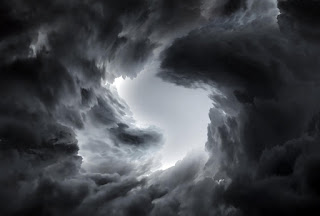
In the prophetic legacy of the Hebrew prophet Hosea, there is a warning to those who “sow the wind.”  They “reap the whirlwind.”  From the context I hear Hosea using “wind” to describe a kind of vacuous pretense that displaces lives of authentic integrity and rootedness; ephemerality in the name of substance; hot air in the name of truth.  “Throw enough of that out there,” the prophet seems to say, “and the nothingness of it all will ultimately dismember you – yourself and everything you touch.”

In the face, then, of just such a present cacophonous swirl, I ask myself again:

What were the airy seeds we sowed?

And how might we uproot them, and plant something better?